Drain Still Backing Up After You Tried Everything? Why a Desentupidora em Mogi das Cruzes SP Changes the Fix
If you have already poured a bottle of drain opener down the shower grate, plunged the toilet until your arm ached, and the water still rises instead of falling, the problem is almost certainly past the point where home remedies reach. What changed recently is that property managers and homeowners in Mogi das Cruzes now treat recurring backups as a diagnostic issue, not a cleaning issue, and they call a desentupidora em Mogi das Cruzes SP before the water reaches the floor drain. This article is written for the person who already tried and hit a wall, so it skips the basics and focuses on what actually moves a stubborn blockage.
The short answer: when a drain returns to slow or gurgling within days of a chemical treatment, the obstruction is usually in the branch line or the main sewer, and only mechanical equipment such as a rotating cable or hydrojetting clears it. Below is a practical comparison of the options you have left, followed by a clear recommendation.
What Your Failed Attempts Tell You About the Blockage
Every method you tried leaves a clue. A plunger that moves water slightly but never restores flow points to a soft clog close to the fixture. A chemical drain opener that foams and drains slowly but returns the next morning suggests grease or soap residue coating the pipe walls, not a solid plug. Water backing up in a floor drain when you run the washing machine means the shared branch line is already partially blocked.
Support technicians read these signals because they determine which tool gets sent. A recurring backup is a symptom of pipe condition, not a one-time clog, and treating it as a clog is why so many DIY attempts fail twice. In Mogi das Cruzes, older residential buildings and houses with mature landscaping frequently have root intrusion at joints, and no liquid product removes roots.
Three Clues That Rule Out a Simple Clog
- Multiple fixtures drain slowly at the same time, which points to a shared line rather than one trap.
- Gurgling sounds come from a drain you are not using, a sign that air is being pulled through a blocked vent or main.
- The water level rises in a floor drain or inspection box when appliances discharge, indicating the main sewer is restricted.
If any of these match, stop adding chemicals. Repeated caustic products can damage older PVC joints and make the eventual mechanical clearing harder and more expensive.
Comparing What You Can Still Do: Home Methods vs. Professional Equipment
The table below compares the realistic options left after a failed DIY attempt. It is written in prose form so you can weigh cost, risk, and outcome without guesswork.
| Option | Best for | Main limitation | Typical outcome |
|---|---|---|---|
| More chemical drain opener | Light grease film in a single trap | Cannot reach branch lines or roots; can damage pipes | Temporary relief, clog returns |
| Manual auger or hand snake | Short blockages near the fixture | Too short for main lines; risks scratching PVC | Works only on shallow clogs |
| Professional rotating cable | Solid clogs, roots, and branch lines | Requires access point and trained operator | Clears the obstruction mechanically |
| Hydrojetting | Grease, scale, and full-pipe cleaning | Needs inspection first to confirm pipe integrity | Restores full diameter, longer-lasting result |
| Septic tank pumping and cleaning | Backups caused by a full or clogged tank | Not a fix for pipe blockages | Solves tank-related overflow |
The pattern is consistent: the further the blockage sits from the fixture, the more the fix depends on equipment rather than effort. A professional team brings a camera inspection, a rotating cable for solid obstructions, and a hydrojetting unit for grease and scale. That is the practical difference a desentupidora Mogi das Cruzes service offers over another trip to the hardware store.
What Hydrojetting Actually Does Differently
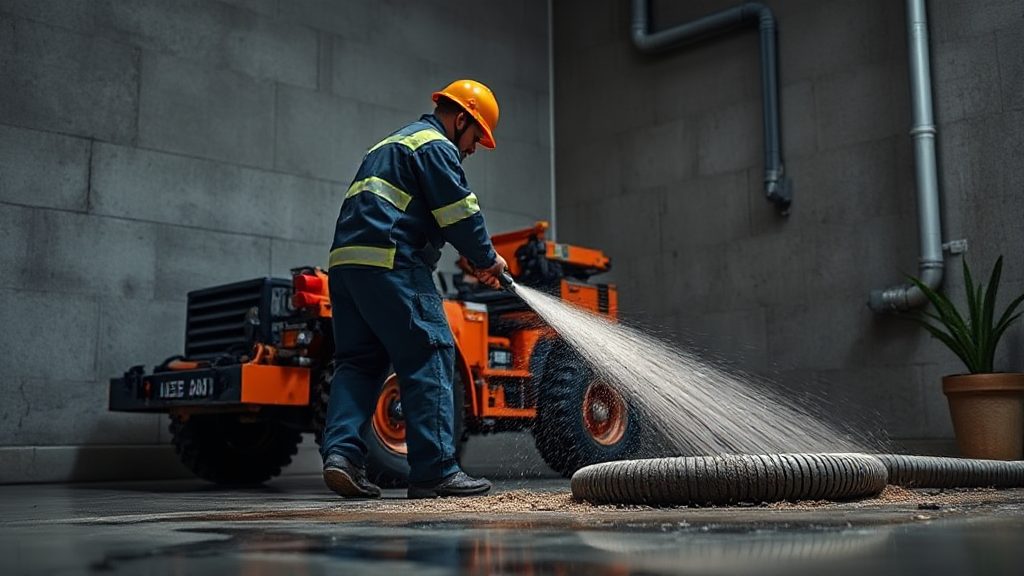
Hydrojetting uses high-pressure water directed through a specialized nozzle to scour the inside of the pipe, removing grease buildup, soap residue, and scale that a cable only punctures. A cable opens a channel through a clog; hydrojetting cleans the pipe wall. If your drain has backed up repeatedly over months, the pipe wall is likely coated, and that coating is what keeps catching debris.
This is also why an inspection before hydrojetting matters. On older or already-damaged pipes, pressure must be adjusted, and a technician who skips that step is guessing. Ask whether the service includes camera verification before and after.
Where the Problem Usually Sits in Mogi das Cruzes Properties
Local housing stock shapes the diagnosis. Mogi das Cruzes has a mix of older central buildings, condominiums with long shared branches, and houses with yards where roots find their way into clay or older PVC joints. Each setting produces a different failure pattern.
Condominiums and Shared Branches
In buildings, a single unit’s slow drain often reflects a blockage downstream in a shared line. The right response is to notify the building manager and have the branch inspected, because clearing only your unit leaves the obstruction in place for the next neighbor. A desentupidora Mogi das Cruzes SP team experienced with condominium lines can work from the inspection box and avoid unnecessary demolition.
Houses With Yards and Septic Systems
Homes on septic systems face a separate failure mode. When the tank fills or the drain field clogs, fixtures back up even though the pipes themselves are clear. In that case, pumping and cleaning the tank is the fix, and no amount of drain clearing will help. If your property has a septic tank and backups coincide with heavy water use, have the tank level checked before assuming a pipe clog.
Kitchen lines deserve their own mention. Grease poured down the sink cools and hardens downstream, and it accumulates at the lowest point of the run. A cable punches through it and flow returns for a few weeks, then the grease closes again. Hydrojetting plus a change in how grease is disposed is the durable answer.
What to Ask Before You Book, and What We Recommend
When you call, describe the symptoms precisely: which fixtures are affected, whether water backs up only when an appliance runs, and whether the problem has returned after previous treatments. That description lets the dispatcher send the right equipment on the first visit instead of the second.
Ask three questions before booking. First, is an inspection included or available? Second, is the price quoted per service or per hour, and does it cover access through an inspection box? Third, what is the response window for an emergency, since a backup at night or on a weekend cannot wait for a weekday appointment. A team that offers 24-hour emergency attendance removes the biggest source of stress in these situations.
Our recommendation is straightforward. If you have tried a plunger and a chemical opener and the drain has already returned once, stop treating it as a cleaning task and book a professional inspection. The cheapest fix is the one that solves the cause on the first visit, and that means mechanical equipment plus a camera check, not another bottle of product. For recurring backups, ask specifically for hydrojetting and a pipe condition report so you know whether the line needs monitoring or repair. For septic-related backups, request tank cleaning rather than drain clearing.
Keep the contact for a reliable local team on hand before the next emergency, and record the date and result of each service. A short maintenance history turns a future diagnosis from guesswork into a five-minute conversation, and it is the single habit that separates properties with chronic backups from properties that stay dry.